Home / Can Quartz Take Heat
Can Quartz Take Heat
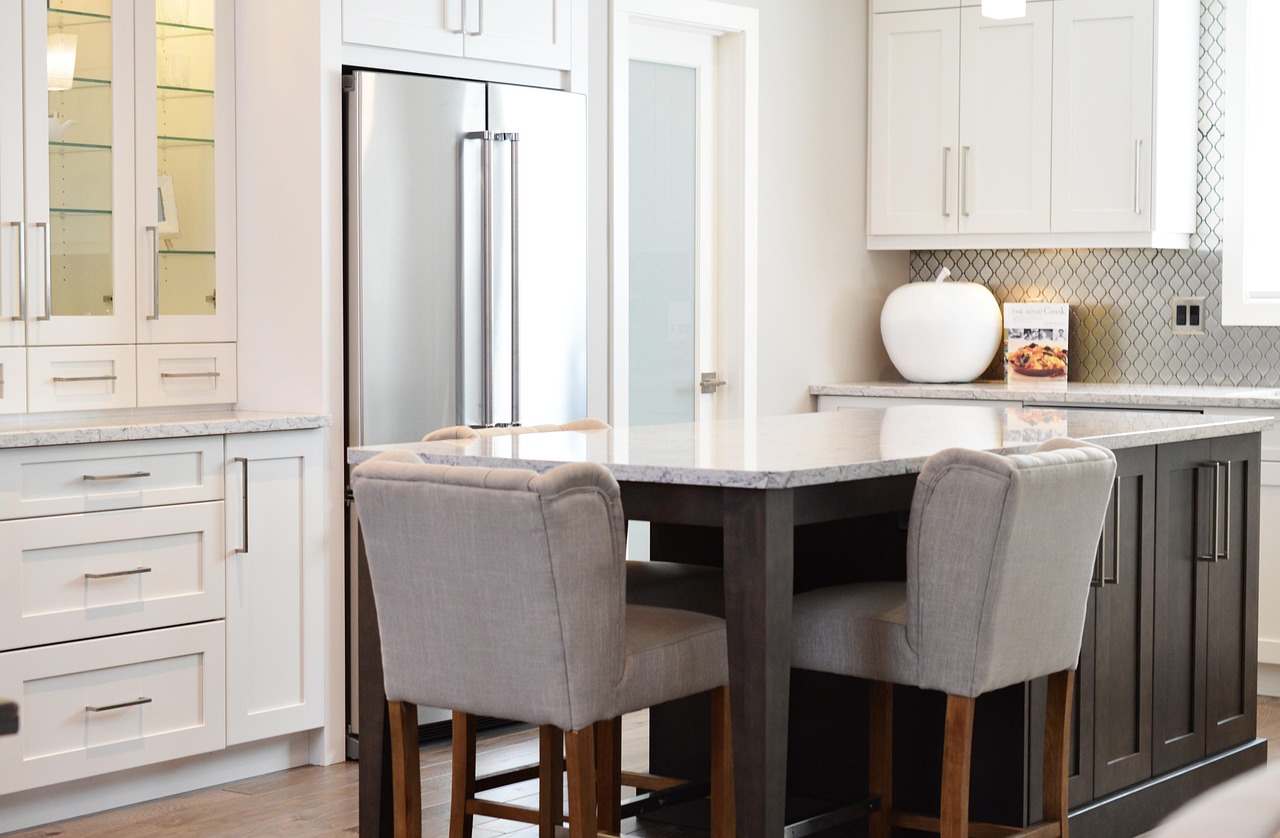
Quartz can take everyday warmth, such as a mug of coffee or a warm plate, but it cannot take direct contact with very hot cookware, because the polymer resin that binds the slab can scorch, discolor or crack well before the quartz mineral itself is affected. A trivet or hot pad under anything straight from the stove or oven is the rule that keeps a quartz top looking new.
Where the weakness comes from
Quartz crystals are stable at temperatures far beyond a kitchen. The resin is not. Most manufacturers say their products tolerate roughly the range of a hot dish, and warn against anything beyond that. When a pan at several hundred degrees touches the surface, the resin underneath breaks down, leaving a white or yellow mark that cannot be polished away. In severe cases, the slab develops a fine crack.
Thermal shock explained
Thermal shock is stress caused by rapid, uneven temperature change. A hot pan heats a small spot quickly while the surrounding slab stays cool. The heated area tries to expand, the cool area resists, and the resulting tension can crack the material. The risk rises in winter if the room is cold, with thick slabs near large cutouts, and with hot items set near an edge or seam. A crack of this type often starts at a corner of a sink or cooktop cutout.
What counts as hot
- Safe without a pad: a mug of coffee, a plate of food, a cold casserole dish.
- Use a pad: pots and pans taken off a burner, baking sheets and dishes from the oven.
- Use a pad with a gap: slow cookers, air fryers, electric kettles and griddles, which hold heat for long periods and can trap it beneath the base.
- Never place: a pan straight from a flame, a broiler pan, or a cast iron skillet fresh from a hot oven.
Trivet choices
Silicone mats, cork, wood and metal trivets all work. Silicone is flexible and easy to store near the stove. A wooden board spreads the heat and doubles as a cutting surface. Metal trivets with rubber feet protect from conducted heat, but thin sheet metal can transfer heat quickly, so a thick one is better. The key is to keep an air gap or insulating layer between the hot base and the slab.
Near the cooktop
The strip of countertop next to a range is the most exposed. A pot handle that extends over the edge of the burner can hold the heat close to the surface, and a pot set down directly beside the burner may have a base hot enough to leave a mark. Leave a few inches of clearance and put a pad at the spot where pots are rested. In a slide-in range installation, the gap between stove and countertop should follow the manufacturer's required clearance so that heat from the stove sides does not scorch the edge.
Sun, ovens and dishwashers
Heat can arrive from unexpected sources. An oven that vents out the front, a toaster oven under a cabinet, or a dishwasher venting steam can warm the stone edge nearby over time. Appliance garages and under-cabinet appliances should have a heat shield. Stone that sits in strong sun through a window can also reach a high temperature, and a hot pan on top of that adds to it.
What to do if a mark appears
A light discoloration may fade as the resin recovers, but a clear burn mark usually does not. Do not scrub with abrasives, because that scratches the gloss. A professional can sometimes grind and repolish a small area, though it may leave a dull patch that differs from the rest. Cracks require stone repair with epoxy and color matching. Keeping the original fabricator's contact information helps with warranty claims, although most warranties exclude heat damage.
Comparison with other surfaces
Granite and quartzite tolerate pot heat well. Porcelain and sintered stone handle heat almost without limit. Laminate and solid surface materials are more sensitive than quartz. Quartz sits in the middle: durable for everything except real heat. Choosing it is entirely reasonable for a household willing to keep pads at hand.
Building a habit
The simplest solution is to place a pad where the hot item goes before the pan comes off the stove. Many cooks keep a folded silicone mat on the counter beside the range or a dedicated hook for trivets. Children and guests should be told directly, since habit is easily forgotten in a crowded kitchen during a holiday meal. A small sign inside a cabinet door may seem fussy, but it prevents a ruined slab.
How manufacturers test and what the numbers mean
Quartz makers publish heat guidance that is deliberately conservative, because lab tests cannot predict every kitchen. A common test sets a heated pan on the slab for a short period and then looks for discoloration or cracking. Passing that test says the slab survived one brief exposure under controlled conditions. It says very little about the tenth exposure, a pan held longer, or a slab that already has a micro crack near a cutout. Treat the published figure as a ceiling, not a target.
Gradual heat damage that goes unnoticed
Not all damage is dramatic. Repeated moderate heat, such as a coffee maker warming a pot all morning or a toaster oven that vents downward, can slowly dull the gloss in one patch. The surface looks slightly hazy, and because it develops over months, owners often assume it is a cleaner problem. If one zone loses its shine while the rest stays glossy, look for an appliance that sits there, and move it onto a pad or a metal tray with feet.
Edges and cutouts are weaker than the middle
A solid slab spreads heat across a wide area, but a cutout concentrates stress at its corners. A pot set down just beside a cooktop cutout heats one side of the narrow strip while the other side stays cool. The strip flexes, and a crack that starts at the cutout corner can travel across the slab in a single event. This is why installers round the cutout corners, add support rails beneath the strip and recommend leaving a clear margin around the cooktop.
Cold shock in reverse
The reverse of a hot pan is also worth knowing. Pouring boiling water into a cold stainless sink set in a quartz top, or carrying a frozen casserole straight from the freezer to a warm oven placed against the counter, produces similar stress in a smaller dose. Running warm water before a big pour of boiling pasta water into an undermount sink spreads the temperature change over a few seconds, which is gentler on the surrounding stone.
Cooktop surrounds and induction
Induction cooktops heat the pan, not the glass, so the surrounding counter stays much cooler than beside a gas or electric burner. That is helpful, yet the pan still gets hot and still needs a pad when it leaves the cooktop. Gas ranges that sit flush with the counter heat the edge from the side, so a heat-resistant strip or a short run of a different material between range and quartz is sometimes used.