Home / Granite Basics: Where It Comes From and How It Behaves
Granite Basics: Where It Comes From and How It Behaves
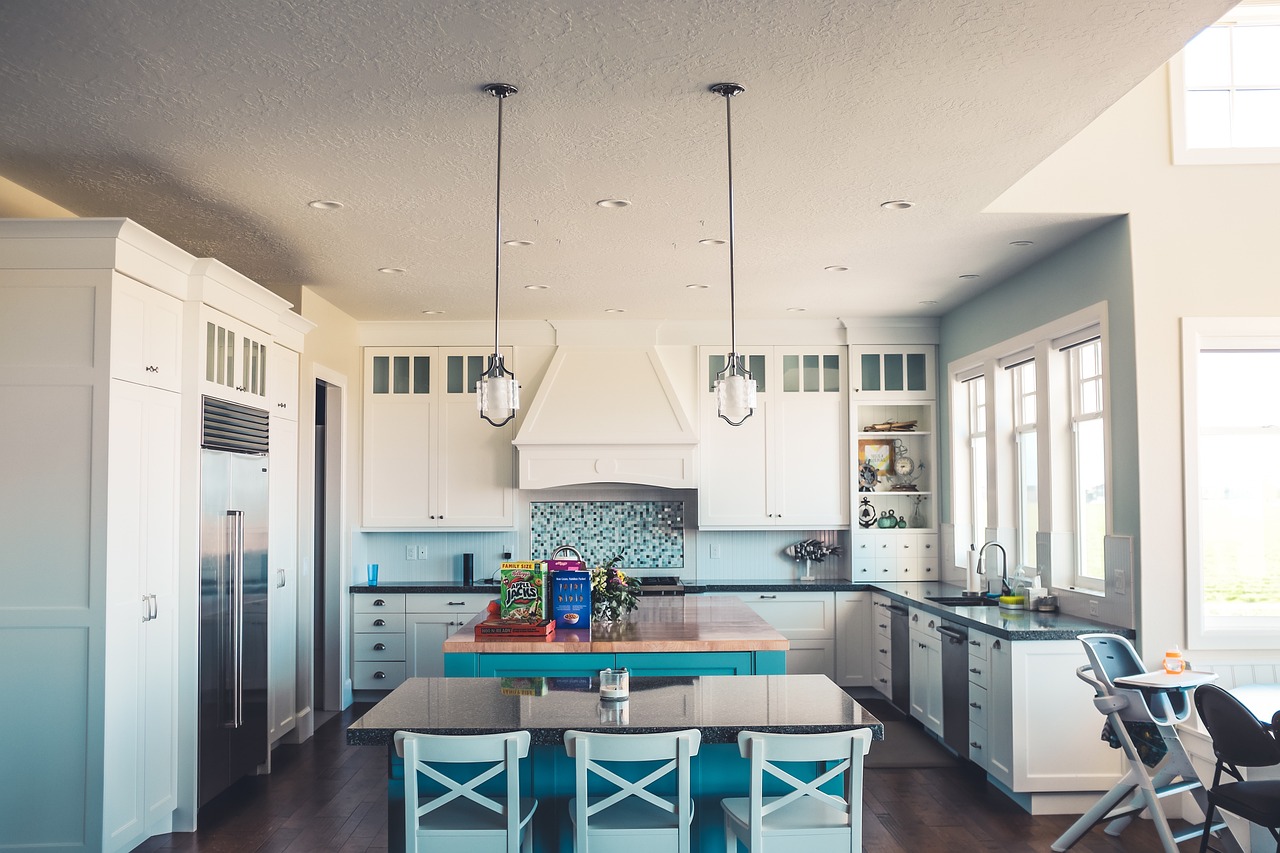
Granite is a hard, coarse-grained igneous rock, made mostly of quartz and feldspar with smaller amounts of mica and other minerals, that formed when molten rock cooled slowly underground. In a kitchen it behaves as a dense, heat-tolerant, scratch-resistant surface with a small amount of porosity that is managed by sealing. Understanding where the stone comes from explains why every slab looks different and why some need more care than others.
How granite forms
Deep in the earth, magma cools over thousands or millions of years. Slow cooling lets mineral crystals grow large enough to see, which is why granite has visible grains rather than a smooth, uniform surface. The mix of minerals determines color: pink and red tones come from potassium feldspar, white and gray from plagioclase and quartz, black flecks from biotite mica and hornblende. Blue and green hues, found in some premium slabs, come from rarer minerals within the rock.
Because the stone is formed by natural processes, no two blocks are identical. Even within one quarry, a slab from the edge of a block can look quite different from one near the center.
From quarry to countertop
Quarry workers cut huge blocks from the mountainside, often using diamond wire saws. Blocks travel to a processing plant where gang saws slice them into slabs, typically about two or three centimeters thick. The slabs are then ground and polished, and sometimes treated with a resin on the back to reinforce natural fissures. Finishes include polished, which is glossy, honed, which is matte, and leathered, which has a textured, slightly dimpled feel that hides fingerprints.
The majority of granite sold in North America arrives from quarries in Brazil, India, Italy, China and several other countries. Each region produces stones with a recognizable character, but names given by distributors vary widely, so the same stone can be sold under several labels.
Color families and what they imply
- Dark, uniform granites such as black or deep brown tend to be denser, less porous, and easier to keep clean, though they show dust and water spots.
- Light, busy granites in cream, gold and white hide crumbs but are often more porous and need sealing more regularly.
- Movement granites with sweeping bands resemble marble from a distance and are popular for islands.
- Exotic granites in blues and greens are often quartzite or similar stones sold under the granite name, so check the actual composition.
Porosity and what it means in practice
Granite is far less porous than marble or limestone, but it is not waterproof. Tiny gaps between mineral grains can absorb liquid, particularly oil, if left on the surface. A penetrating sealer, applied after fabrication, fills these gaps and gives a window of time to wipe a spill before it soaks in. A simple check is to sprinkle water on the stone and watch for darkening: if the stone stays dry for a quarter of an hour, the sealer is working.
Some very dense granites are so tight that sealer barely penetrates. These can go years between applications. Others, more porous, may need a coat annually. A good fabricator tests a sample piece to learn which category the slab falls into.
Hardness and durability
Granite scores around six to seven on the Mohs scale, which measures scratch resistance. Quartz, a major component, sits at seven. A kitchen knife is softer than the stone, so a blade will dull before the granite scratches. The practical conclusion is that a granite top can survive daily cutting, though cutting boards are still wise to protect knives. The stone resists everyday heat, so setting a warm pot on it for a moment does no harm, although sudden thermal shock, such as placing a very hot pan on a cold slab beside a fissure, can crack it.
Fissures, pits and natural flaws
A fissure is a hairline fracture formed in the rock, and a pit is a tiny depression between crystals. Both are natural and often acceptable, but a long fissure that crosses a narrow section of stone, such as the strip between sink and cooktop, can become a weak line. Checking slabs in person lets a buyer spot these features and ask the fabricator how they will be handled, through placement, reinforcement with rods, or choosing a different slab.
Stains and etching
Granite does not etch from lemon juice or wine the way marble does, because it contains little calcium carbonate. Some light-colored granites do hold oil stains if unsealed, and a poultice made of baking soda and water can lift them. Mineral deposits from hard water can leave a white ring around faucets; a soft cloth and a mild cleaner dissolve most of it, and a stone-safe cleaner is better than harsh acids.
Radon and safety questions
Granite contains trace amounts of naturally occurring uranium and thorium, which has led to concern about radon. Measured studies on typical countertops have found emissions far below levels of concern in the home, and a household test kit can confirm the air in the kitchen if the question lingers. Granite is also food safe once sealed, and it has been used in food preparation for generations.
Cleaning routine
Everyday cleaning needs only warm water, a few drops of dish soap and a soft cloth. Avoid abrasive powders and bleach, which can dull the polish and weaken the sealer. Dry the surface after cleaning to prevent water spots, especially near a sink where mineral content is high. Wipe oil and acidic spills promptly even though the stone resists them.
Homeowners comparing options sometimes read more at riverside custom countertop installation desk.
Edge profiles and thickness
Granite takes a wide variety of edge shapes because it is dense and carves cleanly: eased, bullnose, beveled, ogee, and many others. Thicker edges, built by gluing a strip under the slab edge, give a substantial appearance. The stone is heavy, a full kitchen run often weighs several hundred pounds, so base cabinets must be sturdy, and long overhangs need brackets. Properly supported, a granite countertop outlasts the cabinets beneath it.
Choosing among the many names
A single showroom can display dozens of granites with evocative names, and a name alone says little about performance. Two stones with similar colors may come from different quarries with different density. The more useful questions are how the stone tested for absorption, whether any slabs were treated with resin, and whether the supplier can show the slab in person. A dense stone with modest pattern often outlasts a dramatic but porous one with far less trouble.
Finally, remember that the stone is only half of the result. Template accuracy, seam placement and the care taken at the sink cutout decide whether granite looks refined or rushed, so the fabricator deserves the same scrutiny as the slab.