Home / Why Marble Etches
Why Marble Etches
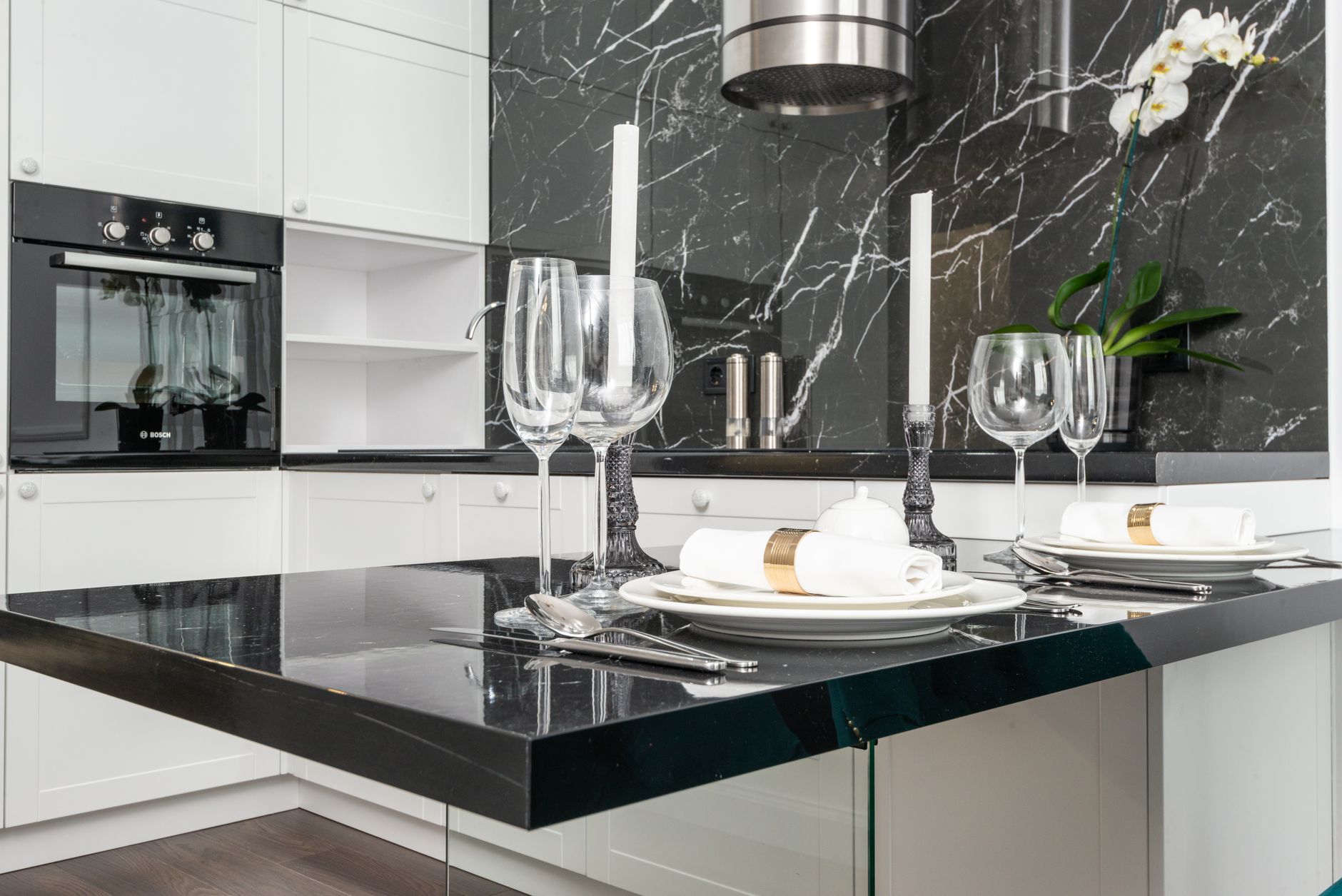
Marble etches because it is made of calcium carbonate, which reacts chemically with acids such as lemon juice, vinegar, wine and tomato, dissolving a microscopic film of the polished surface and leaving a dull spot. An etch is not a stain. Nothing has soaked in; the shine itself has been eaten away, which is why sealers do not prevent it.
The chemistry in one paragraph
Calcium carbonate is the main component of marble, limestone, travertine and onyx. When an acid touches it, the acid breaks the carbonate apart and releases carbon dioxide gas and dissolved calcium. At the surface, this removes a thin film of mineral. A polished stone owes its gloss to a perfectly smooth face. Once the acid roughens that face, light scatters in all directions, so the area looks pale and cloudy compared with the surrounding polish.
Etch versus stain
- Etch: a dull patch, often lighter than the surrounding stone, which feels slightly rough and shows up best in raking light. It appears within seconds to minutes of an acid contact.
- Stain: a darker mark caused by liquid soaking into the stone, such as oil or coffee. It can sometimes be drawn out with a poultice.
Knowing which one is present decides the fix. A stain needs a poultice. An etch needs the surface re-polished.
Common culprits
Lemon and lime juice, orange juice, vinegar, wine, tomato sauce, soda, some salad dressings, and many bathroom products such as toothpaste and perfume can etch marble. Cleaners marketed for tile, scale or grout often contain acids strong enough to damage the stone in a single wipe. Even a coffee ring may etch a little because coffee is mildly acidic. Dark stones show etches as pale clouds, and light stones show them as subtle dull rings.
Why sealer does not help
A penetrating sealer works by filling pores so liquids cannot soak in. Acid does not need to penetrate to do its work; it attacks the surface directly. A sealer may delay it by a short time by keeping the acid from spreading, giving a moment to wipe, but it does not stop the reaction. This is a common misunderstanding that leads people to blame the installer for a normal feature of the stone.
Honed finishes hide etching
On a honed surface, a matte finish already scatters light, so a new etch looks like little more than a faint ring. Many people living with marble choose honed for this reason, and they accept the gradual development of a uniform, softly worn look similar to marble in old European kitchens and bakeries. Polished marble is the most visible case, since every dull spot interrupts the mirror-like gloss.
Removing an etch
For a light etch, a marble polishing powder, available at stone suppliers, can be rubbed into the spot with a damp cloth until the shine returns. For deeper or widespread etching, a stone restoration professional uses diamond abrasive pads in graded steps, then polishes. The area can be re-honed to match the surrounding matte surface. Repeat work thins the stone only slightly, so periodic restoration is possible for decades.
Everyday practice
- Wipe up acidic spills right away with a damp cloth, then dry.
- Use coasters under glasses of wine or juice.
- Place a tray under the olive oil and vinegar bottles.
- Clean with a pH-neutral stone cleaner, never a general-purpose bathroom spray.
- Use a cutting board when slicing lemons or tomatoes.
Other calcium-based stones
Limestone, travertine and onyx behave the same way. Travertine's natural pits are often filled with resin, which etches differently from the surrounding stone. Onyx is a translucent stone that etches and also scratches easily, which makes it more suited to backlit feature walls than to counters. Dolomitic marble contains magnesium and is slightly more resistant to acid, though still affected.
Stones that do not etch
Granite, quartzite, soapstone, porcelain and engineered quartz do not react to normal kitchen acids. A homeowner who loves cooking with citrus and wine, and wants a spotless finish, may find these stones more compatible. Those who love the marble look can choose a quartzite that resembles it, tested before purchase.
Living with the patina
For some owners the occasional etch is part of the appeal, as with a leather chair or a wooden table. The surface records meals and gatherings. Others find it stressful. Deciding in advance which camp you belong to matters more than any product or technique. If the thought of a pale ring after a dinner party bothers you, choose a harder stone. If a softly aged look sounds charming, marble will reward that attitude for generations.
A closer look at the surface after an etch
Under a magnifier, a polished marble face is a mirror of flat calcite crystal planes. After acid contact, those planes become pitted and uneven, and the dissolved calcium forms a fine residue that dries into a whitish film. Wiping the film away reveals the roughened stone underneath. That explains why an etch gets more obvious as the surface dries, and why it can look like a stain when wet but turn pale later.
Strength of the acid and time on the surface
Not all acids act the same. Citric acid from lemons and the acetic acid in vinegar are strong enough to mark marble in under a minute. Wine, tomato and cola are milder but leave marks if they sit. Alcohol and coffee are weaker and often leave nothing if wiped promptly. Time and concentration both matter, which is why a quick wipe prevents many etches that a forgotten glass would cause.
Marble in the history of kitchens
Bakers, butchers and pastry cooks have used marble for centuries, and the old counters in those trades show gentle wear and a soft honed look rather than perfect gloss. That heritage shapes expectations: marble was never meant to stay in showroom condition. Owners who understand this tradition tend to enjoy the stone for what it is, with its etches treated as marks of use.
Choosing a finish before the first spill
Because the dull ring from an etch is the same material as the honed finish, a stone that starts matte hides the future far better than one that starts glossy. Some owners ask the fabricator to hone a polished slab before installation. The change is permanent, lowers the color depth slightly and removes the dramatic mirror look, yet it spares the household the stress of watching each glass of juice.