Home / Slate and Limestone Countertops Compared
Slate and Limestone Countertops Compared
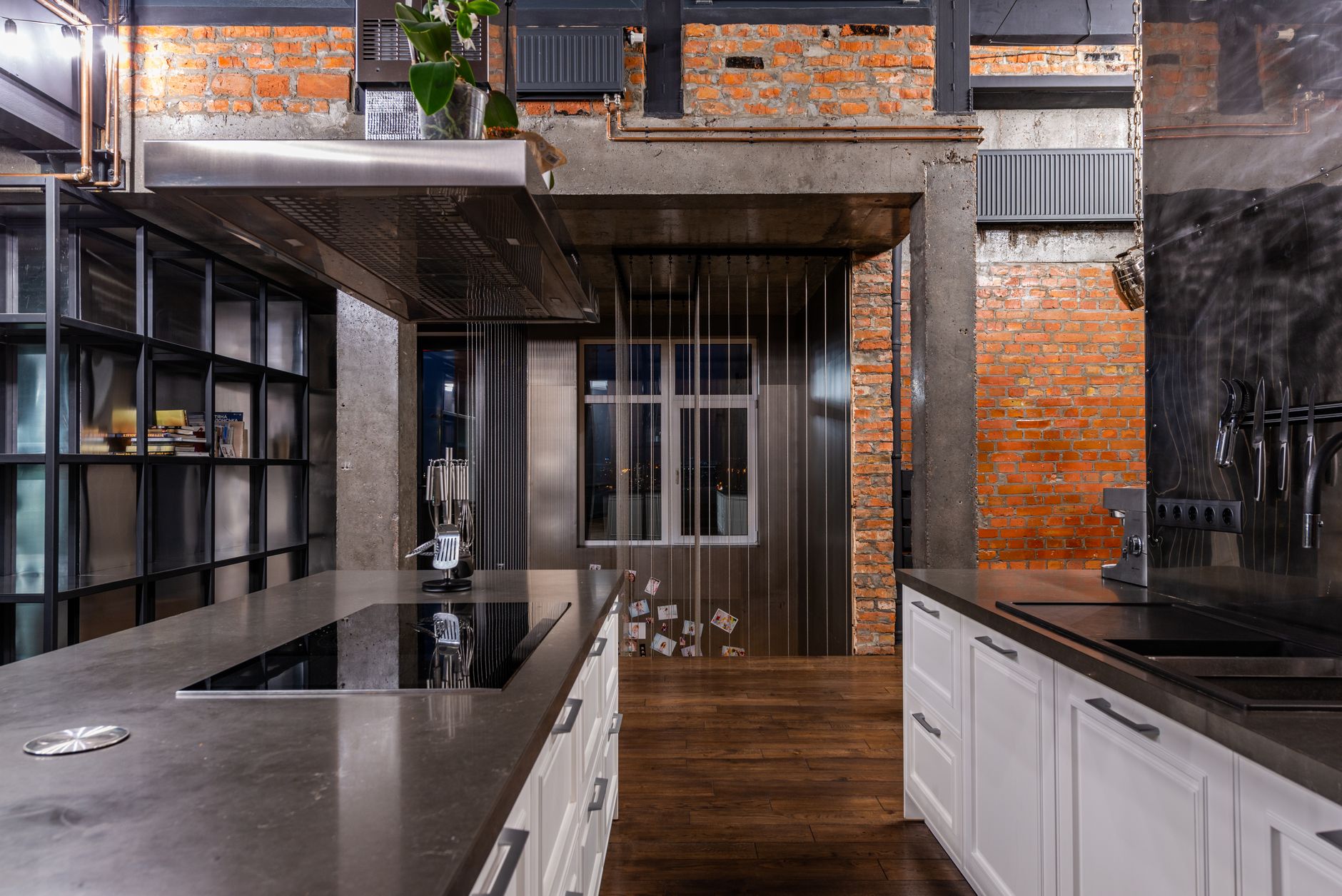
Slate and limestone are both softer natural stones with a quiet, earthy look, and they suit low-traffic or rustic spaces better than the busiest cooking zone. Slate is the tougher of the two and is nearly non-porous, while limestone is chalky, absorbent and reacts to acid. Knowing where each one wears helps decide whether it belongs on a kitchen counter, a bar top, a laundry room or a fireplace hearth.
What slate is
Slate is a fine-grained metamorphic rock that began as clay or mud and was compressed into thin, flat layers. Those layers give slate its signature feature: it splits naturally into sheets. Colors range from charcoal and blue-gray to green, purple and rusty brown, and some slabs are streaked with iron oxide. Surfaces may be honed smooth or left in a natural cleft, which has a gentle texture.
How slate behaves
- Porosity: very low; spills rarely soak in, and sealing is optional, mostly for color enhancement.
- Heat: resists pot heat well.
- Acid: largely unaffected by lemon and vinegar.
- Scratches: light scratches show as pale lines, but oil or a rub with a damp cloth tends to blend them.
- Edges: can flake or delaminate along the layers if struck hard.
What limestone is
Limestone is a sedimentary rock formed from compacted shells, coral and calcium-rich mud over a long time. Its colors are soft creams, tans and grays, sometimes with fossil impressions visible in the surface. The stone feels slightly gritty and warm. Unlike marble, limestone has not been recrystallized by heat, so it remains softer and more absorbent.
How limestone behaves
- Porosity: moderate to high; it absorbs oil, wine and coffee quickly, even when sealed.
- Acid: etches readily, like marble.
- Hardness: soft, scratches and wears under steady use.
- Look: gentle and Mediterranean, popular for tile floors, hearths and wall cladding.
Which suits a kitchen better?
Slate fits a working kitchen reasonably well, especially in a farmhouse, cabin or industrial style. It stands up to hot pans and water. Limestone is better placed in low-use areas such as a powder room vanity, a dry bar or a decorative island away from the stove. In a main cooking zone, it will pick up stains and dull spots quickly.
Finishes and sealers
A honed finish is typical for both stones. Slate may be treated with a color-enhancing sealer that darkens and unifies the tone and adds some stain protection. Limestone needs a penetrating sealer reapplied regularly, though even then it is far from stain proof. Some owners apply a stone wax on slate for a soft luster.
Installation notes
Slate slabs are usually thinner and sometimes uneven in thickness, so installers shim carefully and may use a plywood subsurface. Cutting slate can cause splitting along its layers, so experienced fabricators use slow, controlled cuts. Limestone cuts easily but chips at corners, and it needs a fully supported base because of its softness. Both stones benefit from rounded edges rather than sharp corners.
Maintenance routines
Slate can be cleaned with mild soap and water. A light coat of mineral oil restores depth of color on honed pieces. Limestone calls for a pH-neutral cleaner and immediate wiping of any spill. Coasters and trays are strongly recommended. Neither stone should meet abrasive scrub pads or acid-based tile cleaners.
Where each stone shines
- Slate: laundry room counters, mudroom benches, outdoor kitchens, fireplace hearths, and rustic kitchens.
- Limestone: bathroom vanities, window sills, tabletops and wall panels.
Comparing with harder choices
Granite, quartzite and porcelain outperform both on resistance to wear, but they lack the muted, handmade look. For a buyer who values character over durability, slate and limestone deliver a quiet beauty. The tradeoff is accepting that the stone will change over time, taking on small dings, shifts in color and a soft polish where hands touch most.
Practical advice before buying
View the actual slab and ask about its absorption rate. Ask how it handled in previous projects, and whether the shop recommends a particular sealer. A thoughtful supplier will say plainly if a stone is unsuited to a given use, and that honesty is more valuable than any sample.
Grain direction and cleft texture
Slate splits along natural planes, so every slab has a grain, and the grain should run front to back or along the longest dimension so that the layers are not pried apart by weight on an overhang. A cleft surface, split rather than ground, has gentle ridges that may trap crumbs, while a honed surface is smoother and easier to wipe. Installers often finish the top edge with a slight bevel because a square slate arris tends to flake at the first knock.
Fossils, shells and character in limestone
Many limestones show fossil shells, coral fragments and tiny burrows in the surface. Collectors and designers appreciate them, but the voids around fossils are weaker spots, and a chip can start there. Ask whether visible voids have been filled, and whether the filler is a clear resin that will yellow or a cement-based filler that matches the stone. Some varieties, such as dense Jerusalem or Indiana types, are harder than the chalky ones and behave better in a home.
Outdoor and fireplace uses
Slate has long been used for pool coping, patio paving and fireplace hearths because it handles sun, water and heat without complaint. Limestone suits shaded porches and entry floors, though it weathers in the weather and can darken at the water line when exposed to rain. Neither belongs under a gas grill without a heat plate. For a hearth, a thick slab of either stone, fully bonded to a non-combustible base, gives a long-lasting surface.
Honest expectations about wear
Within a few years, a limestone counter will show small dull patches, a few pale rings and edges rounded by touch. A slate counter will show scattered fine scratches that blend into the dark color. Both patterns are normal and are often the reason people choose these materials. If the idea of a changing surface causes worry, one of the harder stones elsewhere in this collection of guides is a better match.
Pairing with cabinets and floors
Dark slate looks sharp against white or soft sage cabinets and pairs well with warm wood. Cream limestone suits painted cabinets in gray or blue and brings out the warmth of terracotta floors. Neither stone fights with brushed metal or black fixtures. A simple mix of two materials, such as slate on the perimeter and a butcher block island, keeps the room from feeling heavy.